Everyone's talking about peptides, but nobody explains what they actually do,whether they're safe, or if they're even legal in South Africa.
Read how peptides work in your body, which ones a doctor can legally prescribe here, and why cheap peptides from gyms and unlicensed sellers put your health at risk.

What are peptides? Small pieces of protein that tell your cells to do one job, like repair a tendon or make collagen.
- A peptide is a short chain of amino acids, the building blocks of protein. Your body makes thousands of them, and each one carries a message to the cells it fits.
- As you get older, your body makes less of some peptides. By age 60, your blood carries less than half the GHK-Cu (a peptide that tells skin to make collagen) it did at 20.
- Peptide therapy gives your body more of a message it already knows, because many peptide therapies are lab-made copies of peptides your body already makes.
- Peptides are not new to medicine: insulin, which people with diabetes have used for more than 100 years, is a peptide.
- In South Africa, peptide therapy is legal when a registered doctor prescribes it and a licensed pharmacy makes it.
- Cheap peptides from gyms, personal trainers and unknown sellers are usually "research grade": made for lab experiments, not for people.
Your body already makes peptides naturally, and each one tells a part of your body to do one job.
A peptide is a tiny piece of protein. Your body makes thousands of them, and each one carries a message to your cells, like "repair this tendon", "release growth hormone" or "make more collagen". Many peptide therapies are lab-made copies of peptides your body already makes, so they give your body more of a message it already knows.
Your body sends the message.
Your body makes a peptide called GHK‑Cu. When it reaches a skin cell, it tells that cell to make collagen, the protein that keeps your skin firm.
The message gets weaker as you get older.
By age 60, your blood carries less than half the GHK‑Cu it did at 20 (Pickart & Margolina, 2018). Fewer messages reach your skin cells, so they make less collagen.
Peptide therapy adds more of the same message.
A doctor can prescribe extra GHK‑Cu, made by a licensed pharmacy. More messages reach your skin cells, which may help them make more collagen again.
Other peptides work the same way, but carry a different message, like "release growth hormone" or "send repair cells to this injury".
Peptides aren't new to medicine. Insulin, which people with diabetes have injected for more than 100 years, is a peptide.
A peptide is a short piece of protein, which is why it's small enough to carry one clear message.
Want to know which peptide may help you? Answer a 60-second quiz, then a registered doctor phones you.
Claim Your Peptide Therapy ConsultationWhy is there a different peptide for every problem? Because each one only works on the cells it was made for, so a peptide for your skin won't help a sore knee.
Think of a peptide as a key. It travels through your blood until it finds the cells it fits, and only those cells get its message.
A small injection just under the skin, from a ready-to-use pen with a very thin needle.
The peptide travels through your blood to every part of your body.
It fits into a "lock" on the cells that read its message, like a key fits a lock.
Those cells do the job, like releasing growth hormone, sending repair cells to an injury, or making collagen.
Most peptides are injected, because your stomach would digest them before they could work.
Your stomach breaks down protein into small pieces so your body can use it as food. A peptide is protein, so most peptides you swallow get broken apart before they reach the cells they're meant for.
A small injection just under the skin gets the peptide into your blood whole. The pen has a needle much thinner than the one used for a blood test.
Peptides get mixed up with other things you may have heard about. Here is what they are not.
Not a steroid
Anabolic steroids are artificial versions of testosterone, a hormone. A peptide is a small piece of protein that carries a message, like "release growth hormone" or "make collagen".
Not artificial growth hormone
Artificial growth hormone (HGH) is the hormone itself, made in a lab and injected. Growth hormone peptides are different: they may help your own body release more of its own growth hormone.
Not a supplement
In South Africa these peptides count as medicines. That's why a doctor has to prescribe them and a licensed pharmacy has to make them.
Peptide therapy is legal in South Africa, but only if you can answer yes twice.
In South Africa these peptides count as medicines, not supplements. Check any peptide you've been offered against these two questions.
A doctor registered with the Health Professions Council of South Africa (HPCSA) checked your health before prescribing it, and a pharmacy licensed by the South African Pharmacy Council (SAPC) made it to the standard for medicine that goes into people. This is how Clarve works.
You can get peptide therapy the legal way. It starts with a 60-second quiz and one call with a registered doctor.
Claim Your Peptide Therapy ConsultationCheap peptides are often "research grade", which means they were made for lab experiments, not for people.
Most cheap peptides from personal trainers, unlicensed sellers and unknown sources are research grade. Here is what that means for what you actually inject.
| gym, trainer, unlicensed sellerResearch grade | ClarvePharmaceutical grade | |
|---|---|---|
| Made for | Lab experiments | People |
| Who checks your health first | Nobody | A registered South African doctor |
| Who makes it | Unknown | Our own licensed pharmacy in Johannesburg |
| Is it tested? | You usually can't know | Ingredients are lab-tested to be at least 98% pure |
| What you get | Usually a powder in a vial that you mix yourself | A ready-to-use pen with a very thin needle |
| If something feels wrong | Nobody to call | You contact your doctor |
The legal way is often not much more expensive, but it's much safer.
When scientists tested peptides bought online without a prescription, none of them matched the label.
In a 2024 study, researchers ordered a popular peptide injection (semaglutide) from 6 online sellers, without a prescription. Then they tested what arrived in a lab.
- 3 sellers never sent anything. They took the money and disappeared.
- The 3 vials that did arrive all said "99% pure" on the label. The lab found they were only 8% to 14% pure.
- Each vial held 29% to 39% more than the label said, so anyone who followed the label would inject more than they meant to.
- All 3 vials had traces of endotoxin, a toxin from bacteria that can cause fever when it's injected.
Source: Ashraf et al., Journal of Medical Internet Research, 2024.
Sellers print "research use only" on the label because they know it isn't allowed to be sold for people.
That one line lets them sell something that was never made or checked for people, while their adverts, posts and WhatsApp messages still tell you what it will do for your body.
If something goes wrong, the label says you were never meant to inject it. The seller is covered. You are not.
Research-grade peptides usually arrive as a powder that you have to mix and measure yourself at home.
You add water to the powder, work out how much to draw up, and hope the vial and your hands were clean and your maths was right. One mistake means the wrong amount, or bacteria in the vial you inject from for weeks.
A treatment prescribed by a doctor and made by a licensed pharmacy arrives as a ready-to-use pen. Your doctor tells you exactly how much to take, and you don't mix anything.
Check the peptide you've been offered. If you can't answer yes to all 4, don't inject it.
Skip the risk of research-grade peptides. Get a treatment made for people, prescribed by a doctor and made by a licensed pharmacy.
Claim Your Peptide Therapy ConsultationFind the problem that sounds like yours, then let a doctor decide which peptide, if any, is right for you.
Only a doctor can choose a prescription medicine for you. Use this to understand your options before your consult, not to pick one yourself.
For injuries and pain that are slow to heal
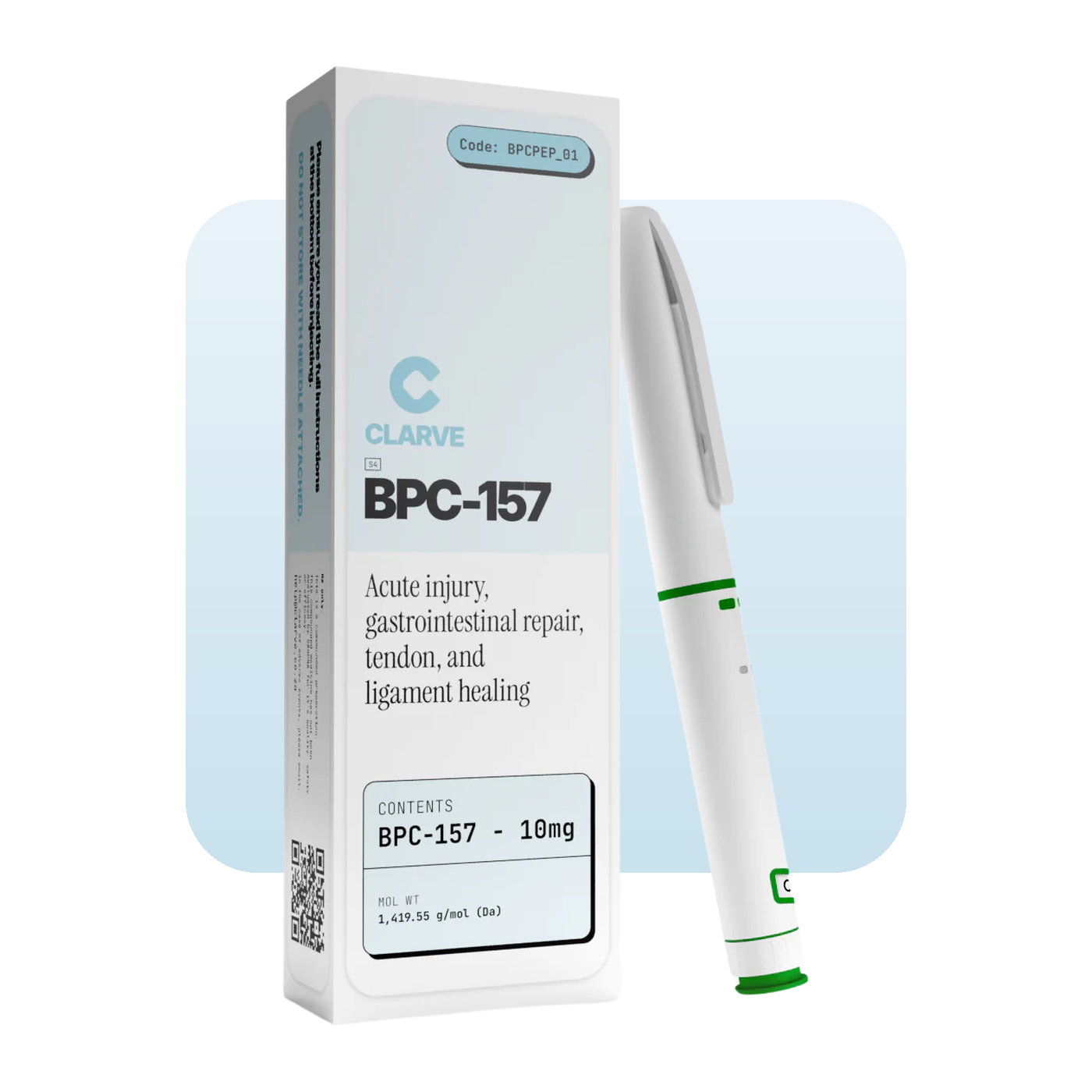
BPC-157
For one sore spot, like a tendon, a joint or your gut.
It's based on a substance your stomach makes to protect itself. It may help your body repair damaged tendons, ligaments, muscle and gut lining.
Not for you if: you have an active or recent cancer, are pregnant or breastfeeding, or get drug-tested for your sport.
Learn More About BPC‑157Ask About BPC‑157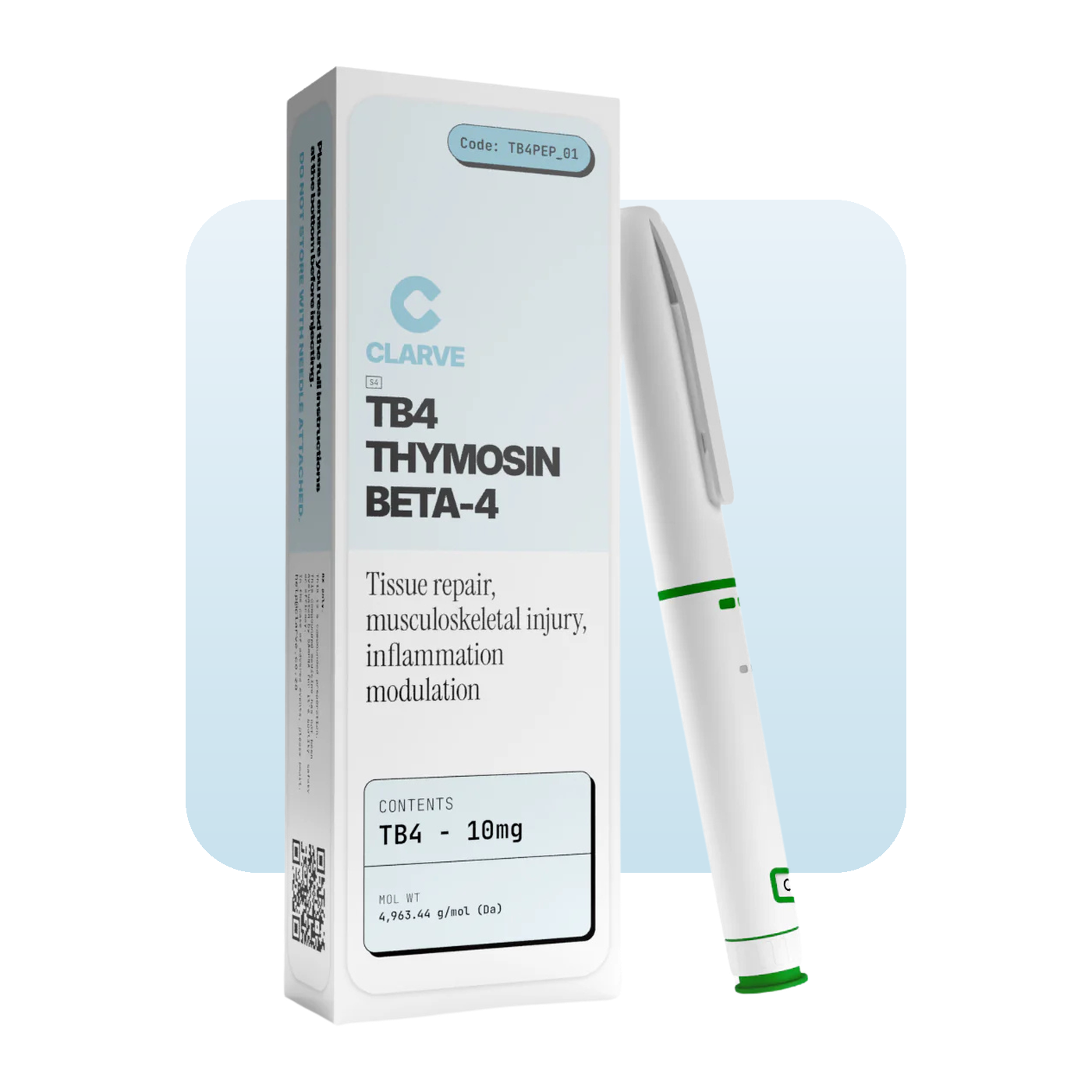
TB4
For aches and stiffness in more than one place.
A repair protein your body already makes to move repair cells to where they're needed. Ours is the whole protein, not the short 7-part copy sold as TB-500.
Not for you if: you have an active or recent cancer, are pregnant or breastfeeding, or get drug-tested for your sport.
Learn More About TB4Ask About TB4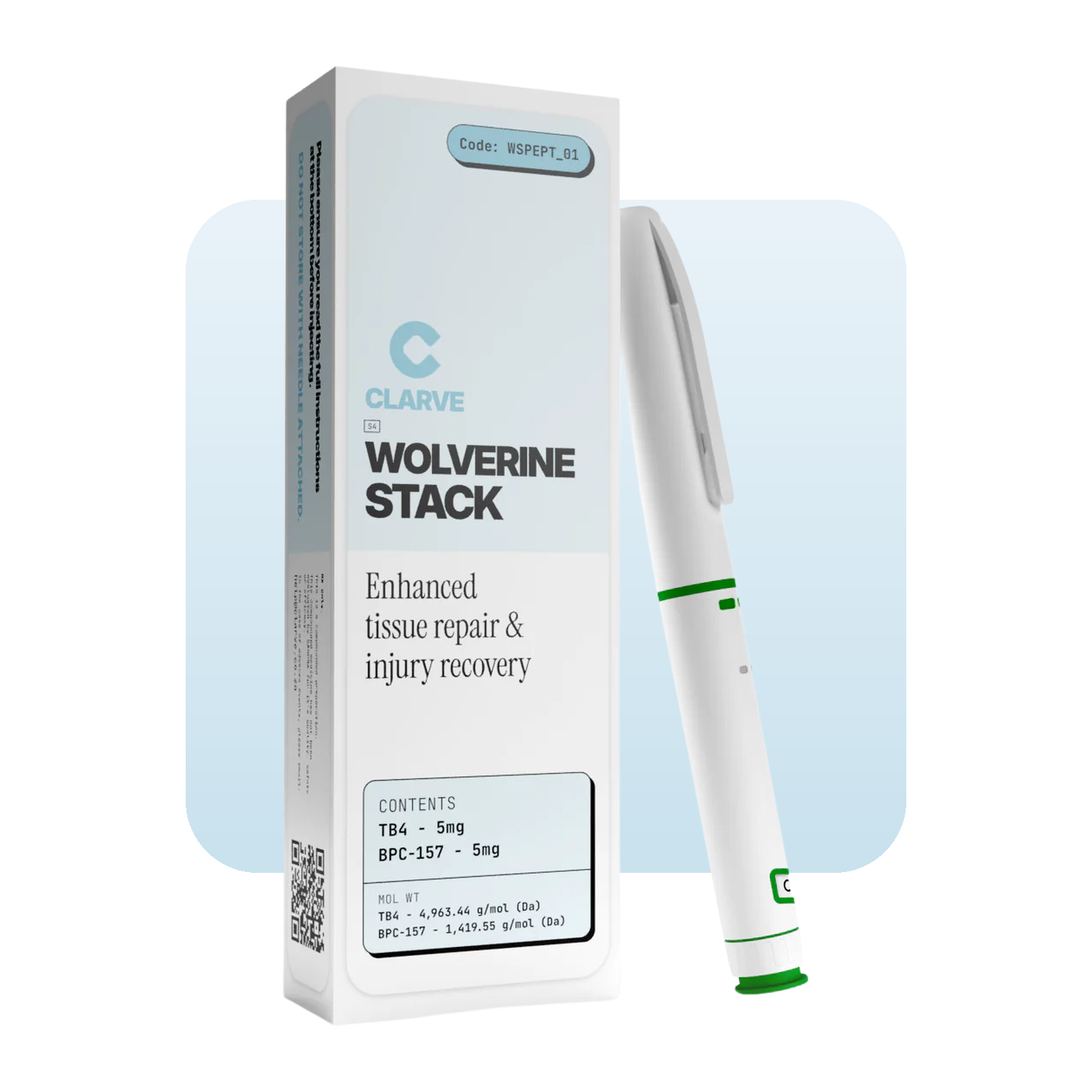
Wolverine Stack
BPC-157 and TB4 used together.
One may help at the sore spot while the other may help more widely across your body. Your doctor decides if using both suits you.
Not for you if: you have an active or recent cancer, are pregnant or breastfeeding, or get drug-tested for your sport.
Learn More About Wolverine StackAsk About Wolverine StackFor people who want more of their own growth hormone
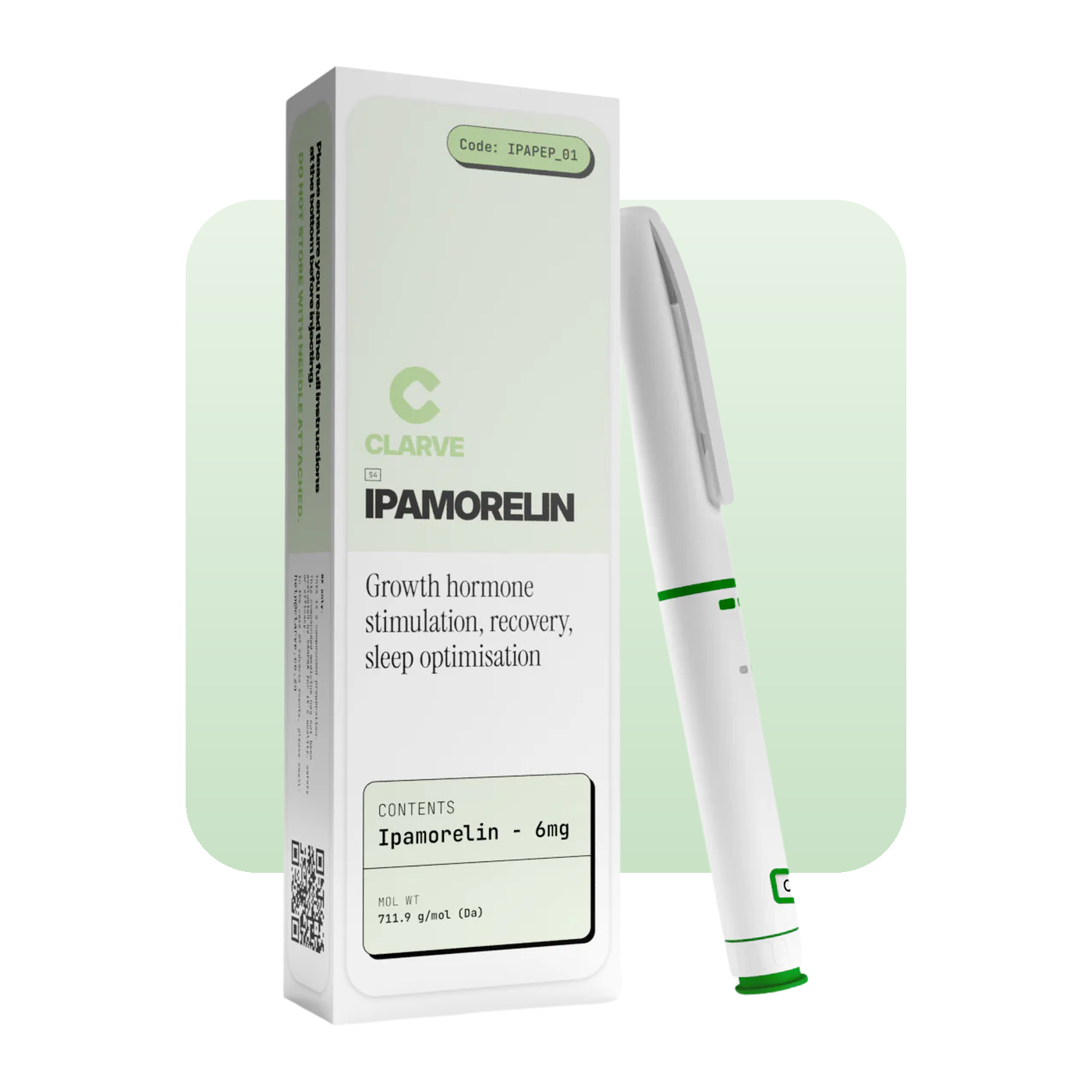
Ipamorelin
One signal, and the simpler place to start.
It may help the small gland at the base of your brain release a short burst of your own growth hormone, so you aren't injecting artificial growth hormone.
Not for you if: you have an active or recent cancer, diabetes or blood-sugar problems (without close doctor oversight), or are pregnant or breastfeeding.
Learn More About IpamorelinAsk About Ipamorelin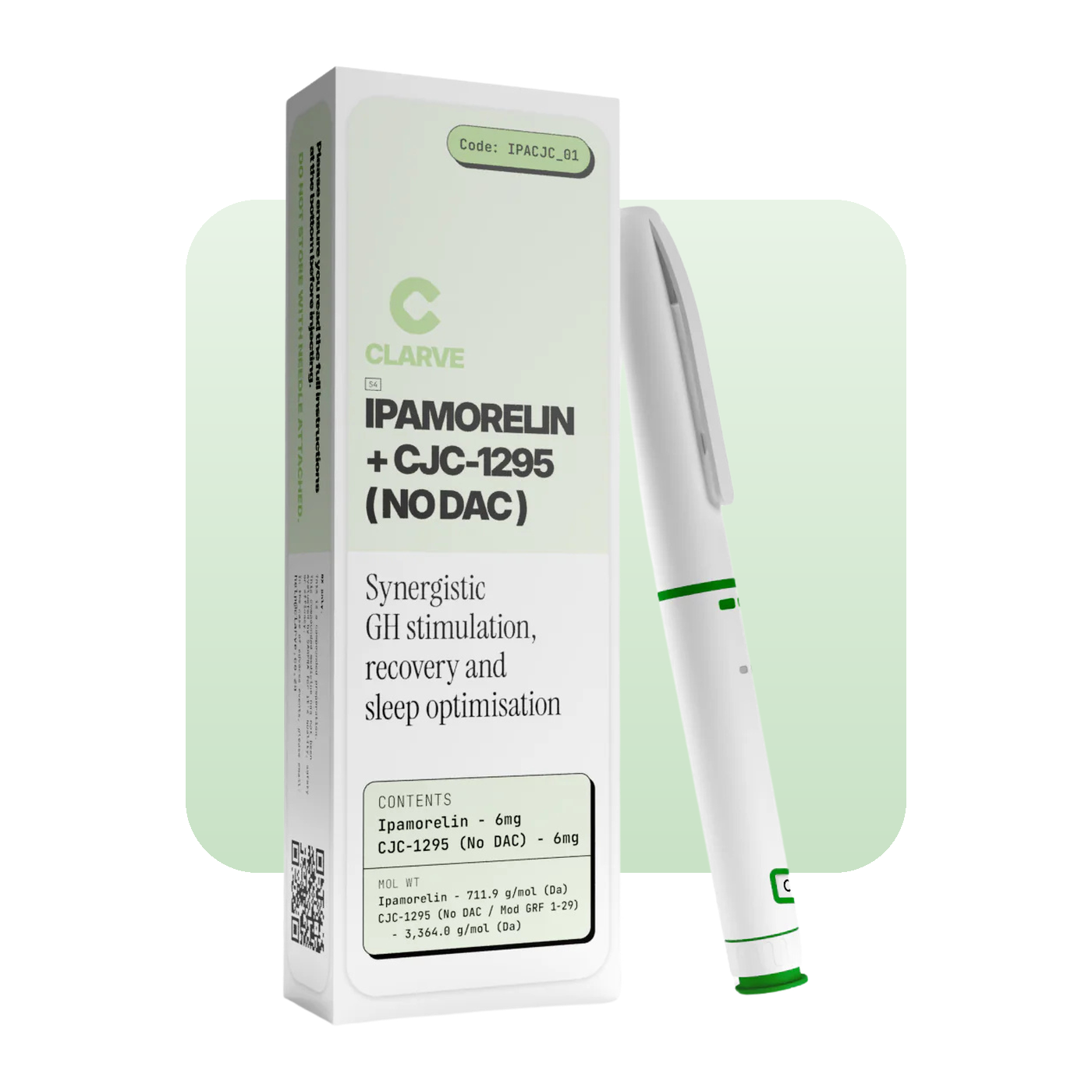
Ipamorelin + CJC-1295
Two signals at once, which may give a bigger release.
CJC-1295 is a long-acting copy of your body's own "make growth hormone" signal. In a study in healthy adults, one dose raised growth hormone for six days or more (Teichman et al., 2006).
Not for you if: you have an active or recent cancer, diabetes or blood-sugar problems (without close doctor oversight), or are pregnant or breastfeeding.
Learn More About Ipamorelin + CJC‑1295Ask About Ipamorelin + CJC‑1295For people who want support for their immune system
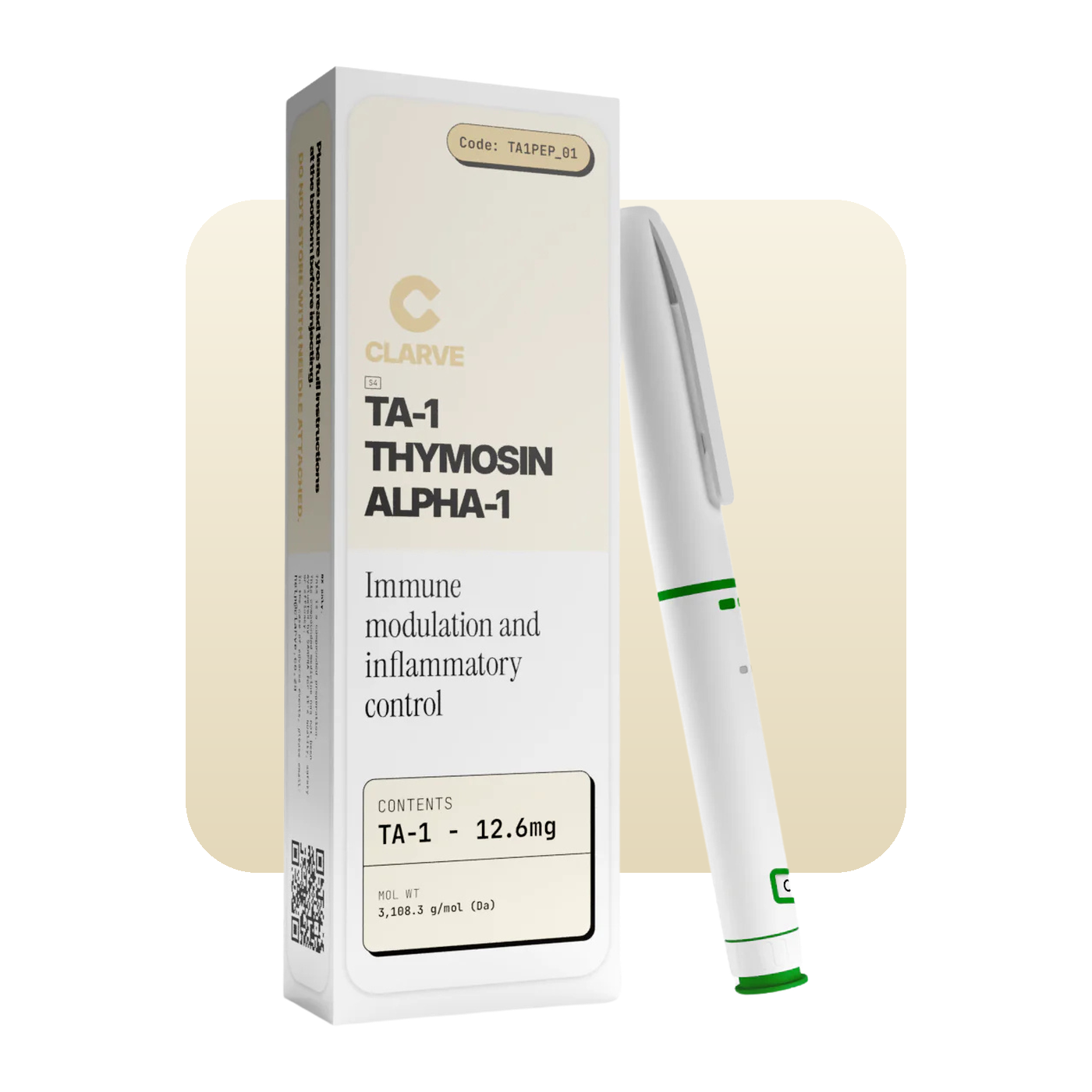
Thymosin Alpha-1
The Clarve peptide with the most human trials behind it.
A small protein your thymus gland already makes to help build your immune system. It's used as a medicine in many countries, and it may help the cells that fight infection work better.
Not for you if: you have an autoimmune condition (unless your specialist says it's okay), or are pregnant or breastfeeding. You can still catch a cold.
Learn More About Thymosin Alpha‑1Ask About Thymosin Alpha‑1For fine lines and skin that has lost its firmness
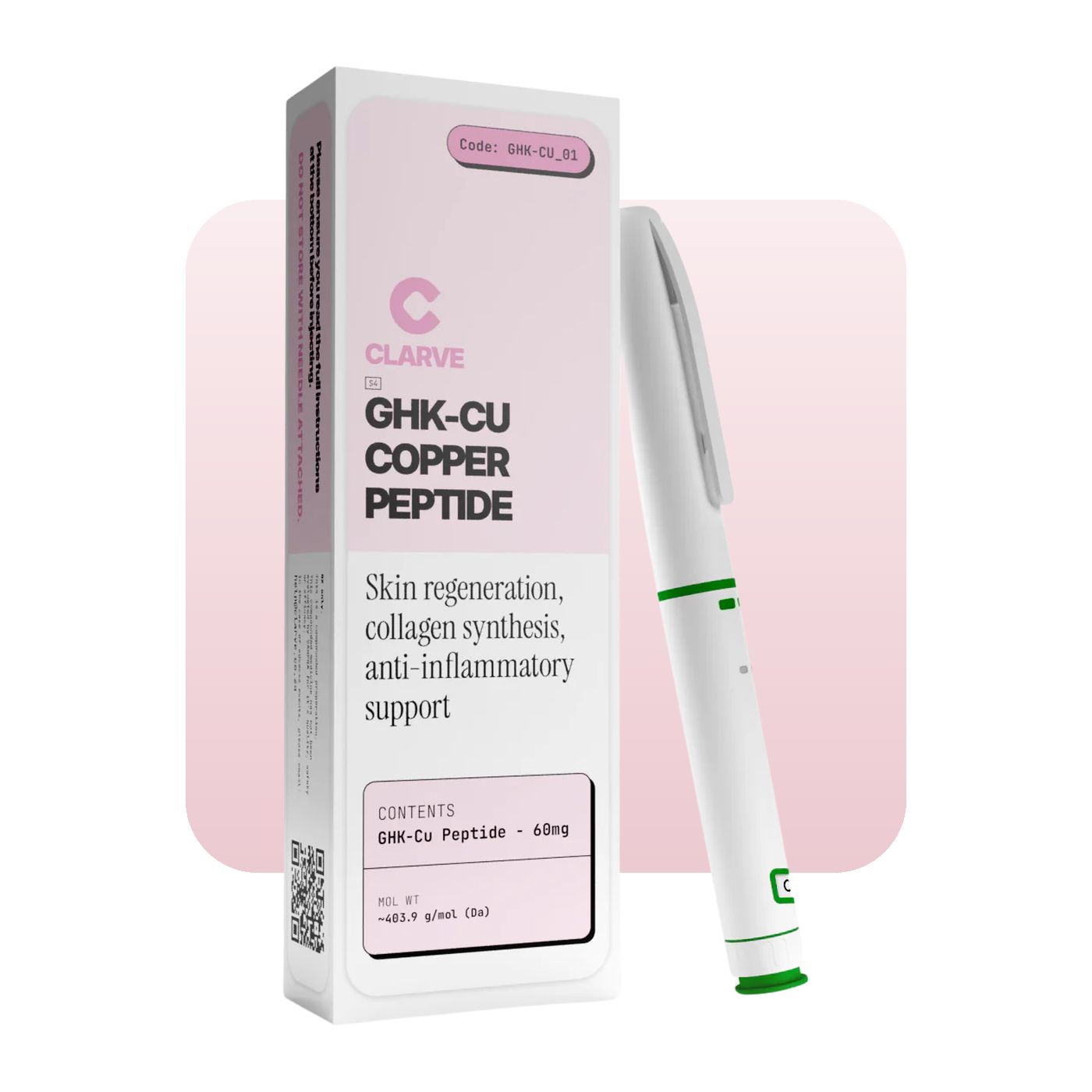
GHK-Cu
The copper peptide that may help your skin make more collagen.
It may help your skin make more collagen, the protein that keeps skin firm. Any change builds slowly, not overnight.
Not for you if: you're pregnant or breastfeeding, have liver disease or a copper condition (unless your specialist says it's okay), or expect an overnight result.
Learn More About GHK‑CuAsk About GHK‑Cu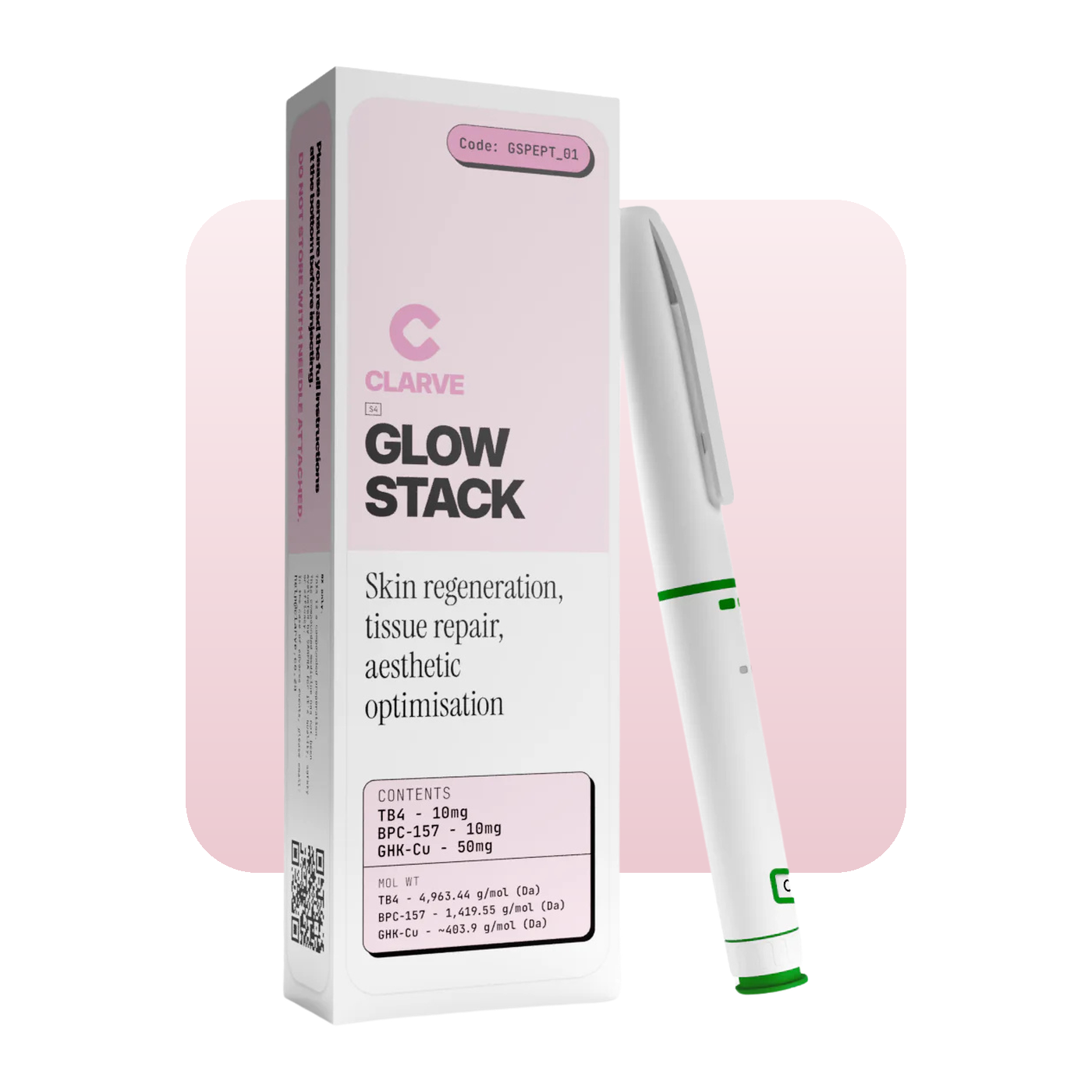
Glow Stack
GHK-Cu plus other skin peptides, prescribed together.
They may help with skin firmness, skin texture and dull-looking skin.
Not for you if: you're pregnant or breastfeeding, have liver disease or a copper condition (unless your specialist says it's okay), or expect an overnight result.
Learn More About Glow StackAsk About Glow StackNot sure which peptide fits your problem? A registered doctor can tell you on a once-off R99 call.
Claim Your Peptide Therapy ConsultationGetting peptides the legal way takes a 60-second quiz and one call with a doctor.
These are prescription medicines, so the law says a registered doctor has to check your health first. That's why it all starts with a once-off call with a doctor, which costs R99.
Answer the 60-second quiz
about your goal and your health.
Pay the once-off R99
for your doctor consult. It's not a monthly fee.
A registered doctor phones you
usually within 30 minutes. They go through your answers and health history, and only prescribe if it's safe and right for you.
You get a payment link
about 30 minutes after the call, with the exact price, if the doctor prescribes a therapy.
Our licensed pharmacy makes your pens
and a courier keeps them cold all the way to your door, usually about 48 hours after they're sent.
If the doctor says no, they tell you why, and the R99 is the only thing you pay. You're never charged for a therapy the doctor didn't prescribe. If anything feels wrong during your treatment, you can contact your doctor.
People felt the same doubts you might have. Here is what they said after their consult.
I didn't think this was legal, until I read how it works.
"I didn't think this could be legal, so I was sceptical. After reading the website it started to make sense. I did the quiz but didn't book straight away. Then a few emails explained how it all works, and that convinced me to book a consultation. I'm glad I did."
I thought it was a scam until I spoke to support.
"At first I thought this was a scam. I chatted to the support team, they answered all my questions, and they helped me book my doctor consultation. I'm really happy with the whole experience."
A doctor phoned me soon after I paid.
"I paid for my consultation and a doctor phoned me soon after. The doctor was professional and took the time to explain what they thought was best for me."
Get straight answers to the questions people ask us most.
Is it safe?
Whether it's safe depends on your health, which is why a doctor has to prescribe it. A registered doctor goes through your full health history to decide if it's safe for you, and your treatment is made from lab-tested, pharmaceutical-grade ingredients. If anything feels wrong during your treatment, you can contact your doctor.
Is it the same as injecting growth hormone (HGH)?
No. HGH is growth hormone itself, made in a lab and injected into your body. The growth hormone peptides are different, because they may help your own body make more of its own growth hormone.
Can I just order peptides from overseas?
No. You're not allowed to order these from abroad for your own use without special permission from SAHPRA, the South African medicines regulator. Without it the order is unlawful and can be stopped at customs. Going through a South African doctor avoids all of that.
How do I know it's real and not fake?
If you buy peptides without a prescription, you usually can't know, because nobody has tested what's inside. With Clarve, your pen is made in our own licensed pharmacy from pharmaceutical-grade ingredients, and each ingredient is lab-tested to check it's at least 98% pure.
Do I have to inject myself?
Yes. It's a small injection just under the skin, from a ready-to-use pen with a needle much thinner than the one used for a blood test. Your doctor tells you how much to take and for how long, and you get clear instructions.
Can athletes use peptides?
Not if you get drug-tested for your sport. BPC-157, TB4, ipamorelin and CJC-1295 are all named on the World Anti-Doping Agency's 2026 banned list, and they are banned in and out of competition.
How much does it cost?
The doctor consult is a once-off R99. If the doctor prescribes a therapy, they tell you the exact price before you pay anything more. Our prices are market-related, so you're not paying a lot extra for doing it the legal way.
What if the doctor says no?
Then they tell you why, and what you can do instead. The R99 consult is the only thing you pay. You're never charged for a therapy the doctor didn't prescribe.
Can I skip the doctor and just buy the peptide?
No. These are prescription medicines, so by law a registered doctor has to check your health and prescribe them first.
How is it delivered?
Anywhere in South Africa, by a courier that keeps it cold all the way to your door. It usually arrives about 48 hours after it's sent.
Answer a 60-second quiz, then a registered doctor phones you to talk through which therapy, if any, suits you.
Claim Your Peptide Therapy ConsultationOnce-off R99 doctor consult. The doctor usually phones within 30 minutes.
Questions first? WhatsApp us on 061 652 4356.